
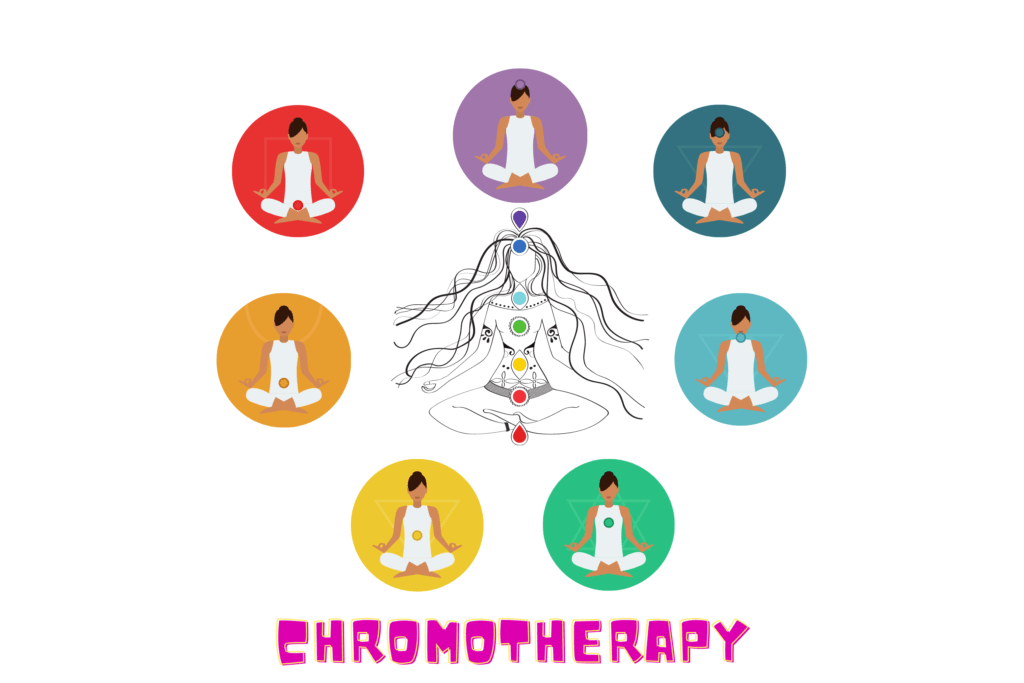
Hey Amigos, as we promised we are here with an interesting and out of the box topic. This topic was fun to write and hope you all will also enjoy reading it.
Colour Therapy, or we call it chromotherapy has been around us since the time of Ancient Egypt. Egyptians believed in the power of light and used different colours of light to promote healing within the human body.
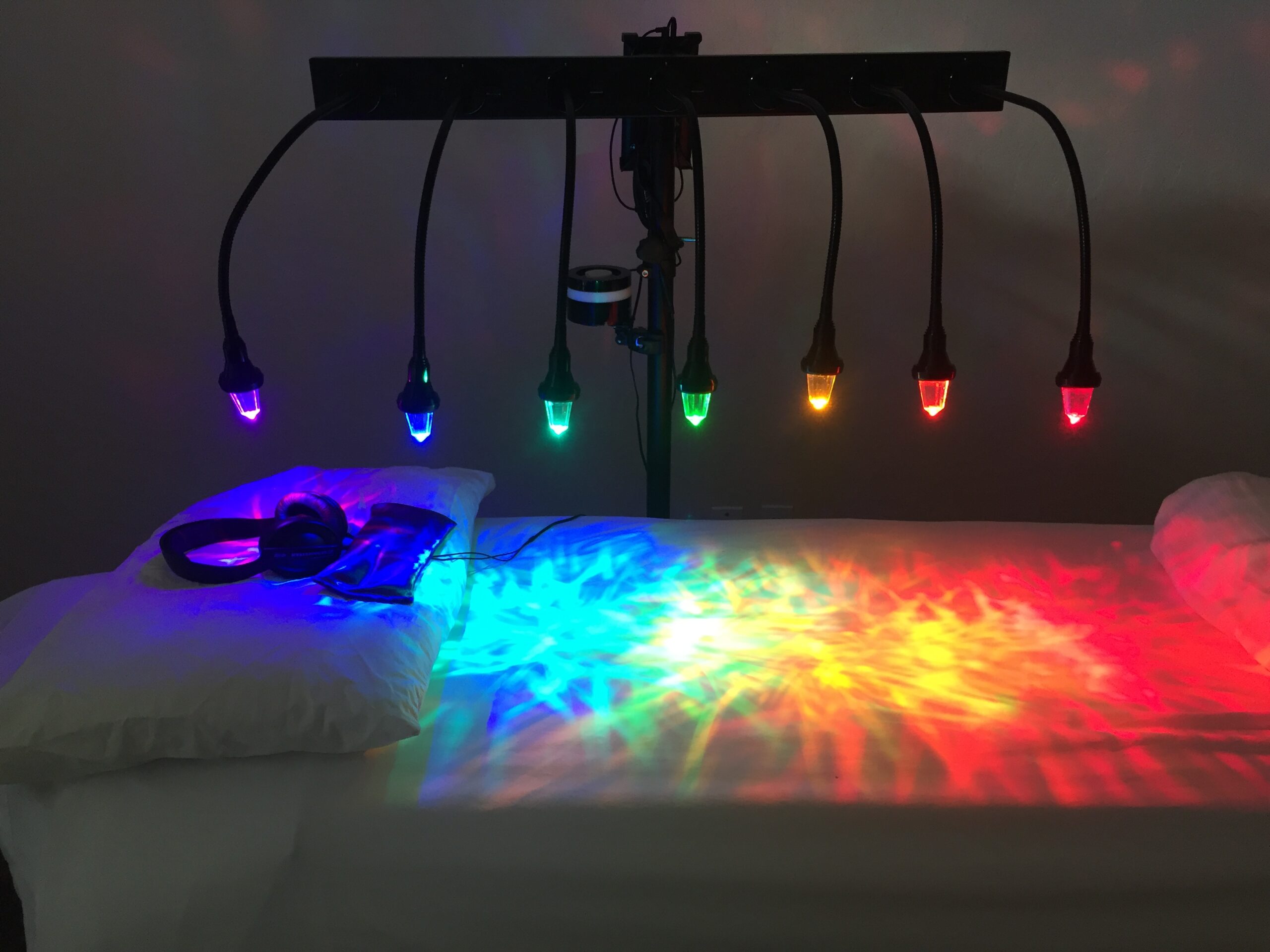
Can you imagine healing by Colours?
We don’t know about you, but truly speaking we didn’t believe it in the beginning when a friend suggested us this topic, but later after some research work, it made us curious to continue with it.
So, It is an entirely non-invasive holistic treatment which aims to bring balance to the energy of our body. It is often used as a complementary therapy alongside other treatments and is a popular go-to practice for people suffering from depression, stress, and seasonal affective disorder.
Scientifically, colours have been proven to affect our moods and perception. Personally, I think it relates with mood in a sense, like red for anger, yellow for energetic.
There is a whole theory behind it, but I don’t like you to be bored with a lot of theory, So I made a summary of it.
Theory (Summarized)-
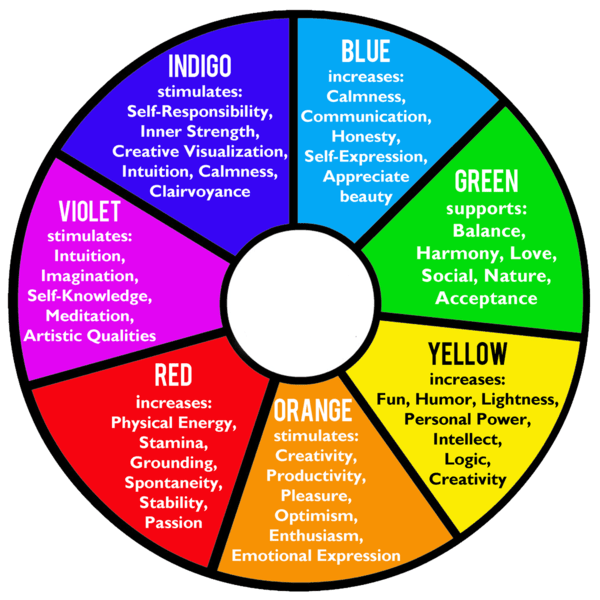
Simply put, colour is just light of varying wavelengths and frequencies. Electromagnetic waves constantly surround us, and the colour is part of those waves. Every single cell in the body needs light energy. Our cells absorb colour, and this affects us on every level, physically, emotionally and spiritually.
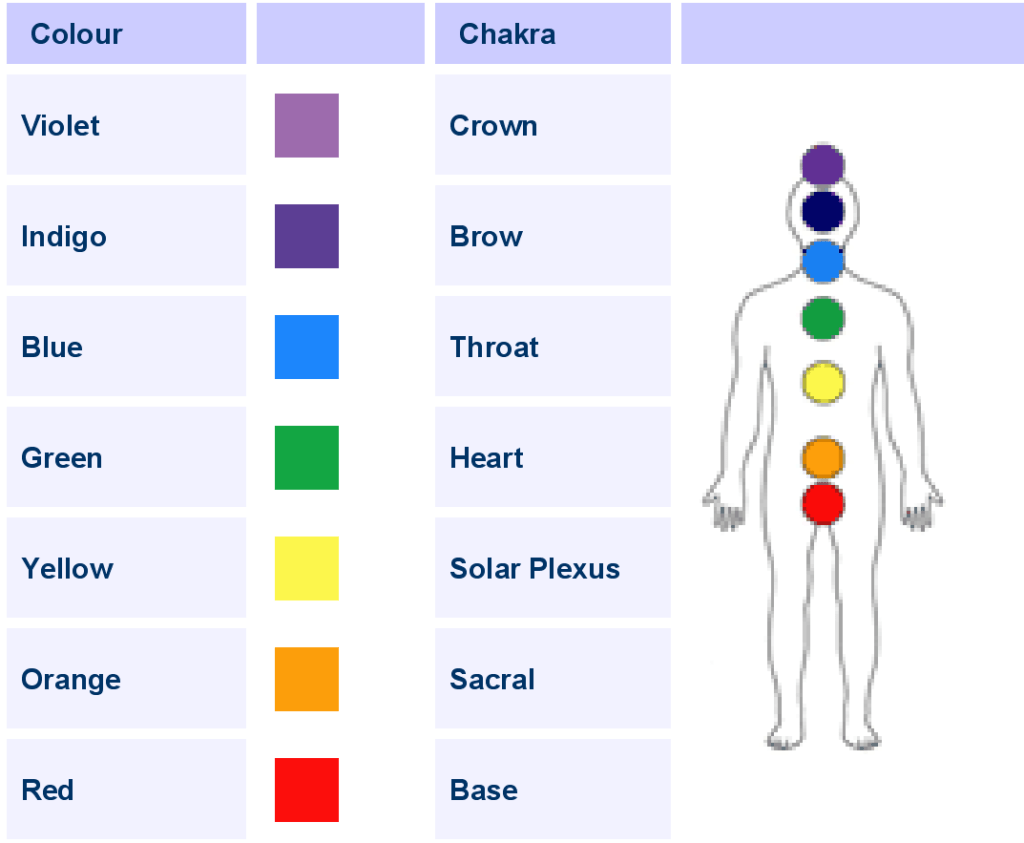
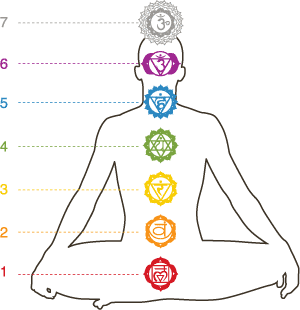
It is thought that the famous colours of the rainbow, red, yellow, green, blue, orange, violet and indigo resonate with the main energy centres of the body.
Cultural Relation– Chromotherapy
Color therapy and its connection to the human body has continued to be important in some cultures. Even in Western societies that tend to prefer modern, institutionalized medicine, natural healers have continued to use colors to help people improve their physical and emotional health.
Although Western medicine doesn’t accept colour therapy as much, Western researchers are studying the scientific properties of visible light/coloured light and the light frequencies within it. Colour therapy hasn’t ‘earned’ a place in Western medicine yet, but there’s a strong possibility that it might when all the research results come in.
Methods of Delivery for Colour Therapy
The alternative healing practice of colour therapy relies on the delivery of the light frequencies of colour to the body. The light enters the eyes to get into the human body or colour therapy equipment may be used.
Through Eyes
One way to take advantage of light therapy is to view the colour simply. You look at the colour for a few minutes and receive the therapeutic effects as light enters your eyes. That’s all there is to the delivery. What you need to be careful with are the colours you choose. Green is considered the safest colour. Red and orange may cause you too much excitement and agitation.
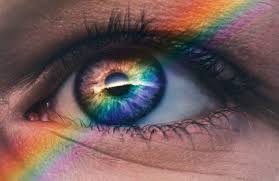
Color therapy is individualized as well. What works to help you might make someone else feel worse. For example, if you have a lot of anxiety and need to calm down, blue or blue light might be a good color to use. If someone else were depressed, though, blue wouldn’t be a color they should use in color therapy. Red light is generally associated with negative emotions, but someone working to process anger may find it potentially useful.
Via Color Therapy Equipment
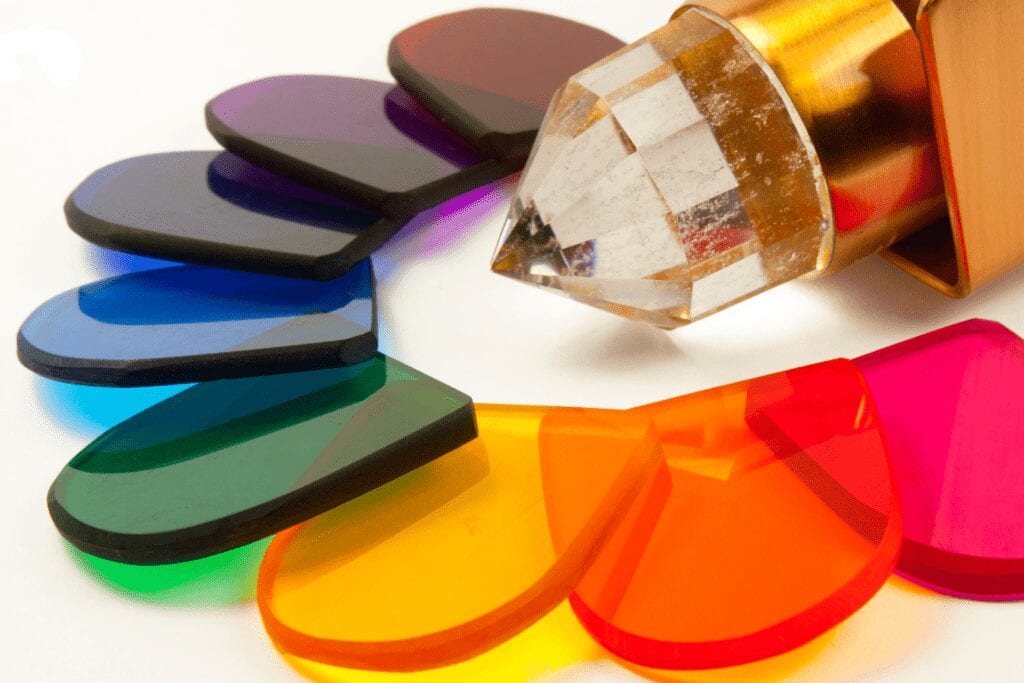
There are various kinds of colour therapy equipment. Some of them can be made easily, while others can be ordered for a colour therapist’s use. This equipment uses the projection of coloured visible light from the visible spectrum. Sometimes, the colour is projected on a screen, and you look at it. The light comes from specific light bulbs of no more than 500 watts. With chromotherapy equipment, the coloured light can be shone on your skin as well using modern and sometimes high-tech equipment that allows the hue and intensity of the colour to be dialled in precisely.
Why Is Chromotherapy Controversial?
As a science, color therapy is in its infant stages, if it’s even been born into modern thinking. Some research is in progress, and some has been completed. So far, the studies have not revealed any reliable evidence about if and how colors affect the physical body.
One 2004 review of studies on color use in healthcare settings revealed some interesting problems with the concepts behind color therapy.
- There’s no direct link between specific colours and health.
- There’s probably a connection between colour and mood, but one specific colour isn’t directly associated with one specific mood.
- Colour changes the way we perceive and behave, but just how it affects us isn’t clear.
- Current thinking on colour seems to be an oversimplification of a much more complex type of the influence.
In some countries, color therapy is recognized as a healing treatment and is regulated by law. In other countries, Chromotherapy is considered a scam and a waste of time and money. As research continues, color therapy may become more controversial or less so. For now, each person must decide whether chromotherapy is something they want to pursue or not.
Frequently Asked Questions (FAQs)
What is colour therapy and how does it work?
Colour therapy is the use of colour in various ways In order to receive the therapeutic benefit. Colour therapy can take many different forms, as we’ve discussed, and there are many different cultural and spiritual connections to colour healing throughout the world.
What does a colour therapist do?
A colour therapist will incorporate different types of color psychology and color medicine into therapeutic treatment for the human body. What specific activities and methods are used may depend on the person and/or the goals they hope to achieve.
What color helps anxiety?
Generally soft, neutral (or perhaps even muted) colours are considered beneficial for addressing anxiety. Because of their associations with tranquillity, both blue and green are specific colours that are often referred to when looking to promote mental and physical relaxation.
Bonus: Phototherapy, which is a treatment that utilises blue-coloured light, is specifically administered to newborn babies suffering jaundice. Jaundice is a medical condition which occurs when there is an obstruction of the bile duct, liver disease or an excessive break down of red blood cells.
Sharing is Caring ❤️

Insightful and fun to read. You guys are awesome. Keep it up!!
very informative
seriously topic is out of box..reading something calming after long time